
Reading about photography rarely makes anyone better at it. What separates these eighteen is that every one hands you something to act on: where to stand, what to cut, which light to refuse. A few will take an afternoon, a couple will take a month, and none of them leave you where they found you.
Learning to see
Before the gear and the settings. These are the books that rearrange how you look at an image, yours and everyone else's.
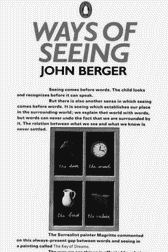
Ways of Seeing
John Berger · 1972
Four essays and three wordless picture-essays, adapted from the BBC series, on how images carry ideology. Berger's argument, that the way we see things is affected by what we know and believe, is the foundation everything else on this list sits on. Short enough to read in an afternoon and impossible to unsee.
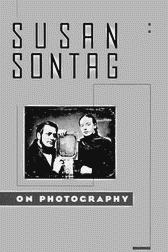
On Photography
Susan Sontag · 1977
The book that made photography a serious subject for criticism. Sontag is not flattering about the medium: she treats the camera as an instrument of acquisition and, sometimes, aggression. Read it when you're confident; it's a useful corrective.
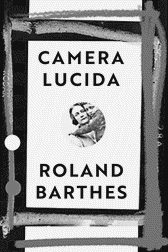
Camera Lucida
Roland Barthes · 1980 · Originally La Chambre claire; English translation by Richard Howard, 1981
Barthes' last book, written after his mother's death, hunting for what makes a single photograph pierce you. His distinction between studium (the interest a photo earns) and punctum (the detail that wounds you) is the most useful vocabulary anyone has given photography.
Photographic craft
The technical core. Composition, exposure and light: the three things that separate a photograph you meant to take from one that happened to you.
Read This If You Want to Take Great Photographs
Henry Carroll · 2014
The best first book on photography that exists. No jargon, no camera worship, just a master image on each spread and a plain explanation of the decision that made it work. Give it to anyone who has just bought a camera.
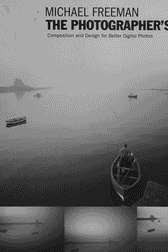
The Photographer's Eye
Michael Freeman · 2007
Composition treated as design rather than as rules. Freeman breaks down frame dynamics, balance, and visual weight with a rigour most composition books avoid, and he's honest that the 'rules' are descriptions of what tends to work, not laws.
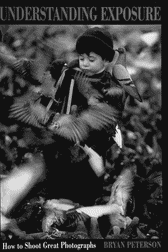
Understanding Exposure
Bryan Peterson · 1990 · Fourth edition, 2016
Still the clearest explanation of the aperture/shutter/ISO triangle in print, built around Peterson's idea of the 'photographic triangle' and creatively correct exposure. If exposure is still something you fight with rather than choose, start here.
Light: Science & Magic
Fil Hunter, Steven Biver & Paul Fuqua · 1997
The serious lighting book. It teaches the physics of how light behaves on surfaces, the family of angles and why reflections do what they do, so you can light anything rather than copy setups. Dense, unglamorous, and the single biggest jump in quality available to most photographers.
The moving image
Where photography becomes film: shots that connect, images that carry structure, and the cuts between them.
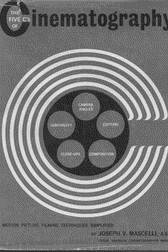
The Five C's of Cinematography
Joseph V. Mascelli · 1965
Camera angles, continuity, cutting, close-ups, composition. Sixty years old and still the clearest statement of film grammar ever written, because the grammar hasn't changed. Everything since is an elaboration on this.
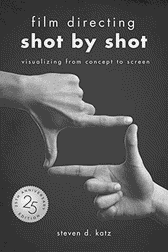
Film Directing: Shot by Shot
Steven D. Katz · 1991 · Subtitled Visualizing from Concept to Screen
The storyboarding and visualisation bible. Katz shows you the geometry of coverage: eyelines, the 180-degree line, staging in depth, all with diagrams that make abstract blocking concrete. The book most working directors actually own.
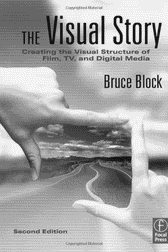
The Visual Story
Bruce Block · 2001
Block's argument is that the visual components of space, line, shape, tone, colour, movement and rhythm have their own structure that must be shaped alongside the story's. It is the only book that teaches you to plot the visual intensity of a film like a narrative arc.
Cinematography: Theory and Practice
Blain Brown · 2002
The textbook. Lenses, exposure, colour science, lighting, camera movement and the digital pipeline in one volume, kept current across editions. Where you go once you know what you want the image to do and need to know how it's actually achieved.
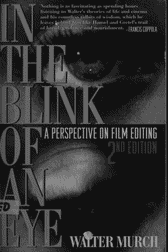
In the Blink of an Eye
Walter Murch · 1992 · Revised second edition, 2001
A hundred pages on film editing by the man who cut Apocalypse Now, containing the best-known hierarchy in the craft: emotion, story, rhythm, eye-trace, two-dimensional plane, three-dimensional space, in that order of importance. Essential even if you never cut a frame.
Directing, story and the business
How films actually get made, by people who made them and were unusually honest about it afterwards.
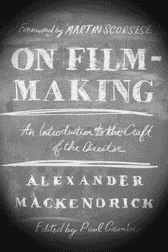
On Film-making
Alexander Mackendrick · 2004 · Edited by Paul Cronin, foreword by Martin Scorsese
The handouts Mackendrick (Sweet Smell of Success, The Ladykillers) wrote across twenty-five years teaching at CalArts. Rigorous on dramatic construction and film grammar in a way almost no other directing book is, because it was built to be taught rather than sold.
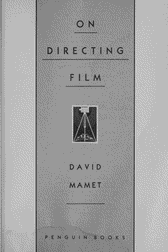
On Directing Film
David Mamet · 1991
Built from Mamet's classes at Columbia. His position is severe: tell the story through the juxtaposition of uninflected images, not through dialogue or performance. You may end up disagreeing. You will direct better for having argued with it.
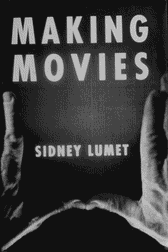
Making Movies
Sidney Lumet · 1995
Lumet walks through his process one department at a time: script, casting, camera, art direction, shooting, the cut, the mix. Generous, specific and entirely free of mystique. The best account of what a director's job actually consists of, day to day.
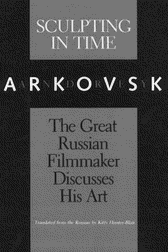
Sculpting in Time
Andrei Tarkovsky · 1986 · English translation by Kitty Hunter-Blair
Tarkovsky's artistic testament, written as he was dying in exile. Part theory, part autobiography, and the most serious case anyone has made for cinema as an art of time rather than of images. The antidote to every book that treats film as a set of techniques.
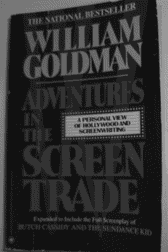
Adventures in the Screen Trade
William Goldman · 1983
Goldman on how Hollywood really works, from the screenwriter who gave us Butch Cassidy, All the President's Men, and the line 'nobody knows anything.' Funny, bitter and clarifying about the gap between the craft and the industry.
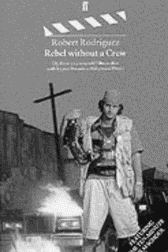
Rebel Without a Crew
Robert Rodriguez · 1995
The production diary of El Mariachi, shot for $7,000. It is a practical argument that constraint is a creative tool rather than an obstacle, and it has pushed more people into actually shooting something than any other book here.